
As a martial arts studio owner and instructor, I spend a decent amount of time trying to talk people into coming in and trying out classes. While many people are very open to having their child come in to try classes, getting adults in to try a class is like pulling teeth. I tend to get the same few excuses. Lack of money, lack of time, assumed physical limitations, and assumed lack of need. While I can argue the lack of money and lack of time as just nice ways of saying, “no” in some scenarios, it can also be true and not the focus of this blog.
As for physical limitations, this can be a factor to an extent, but in most cases it’s not an issue. Especially when I hear, “I’m not in good enough shape to learn martial arts”. Martial arts training will improve this. Most, if not all, systems are designed to condition your body for the functional movements needed for self-defense. Not to mention that most believe martial arts training is generally a much more enjoyable way of improving one’s health compared to lifting weights or running. But this too, is not the purpose of this blog, just a side note.
When I hear some version of “lack of need”, I always ask for clarification as to why they believe martial arts training isn’t needed, specifically traditional self-defense arts as opposed to sport related arts. Some will state that they carry a weapon, such as a handgun or knife. Others state that they aren’t a fighter but a lover. And a select few truly believe they will never be involved in an altercation in their life, which is the hope we all carry. This, “lack of need” is what I’ll be addressing in this blog as it’s the most understandable, the hardest to explain, and very untrue.
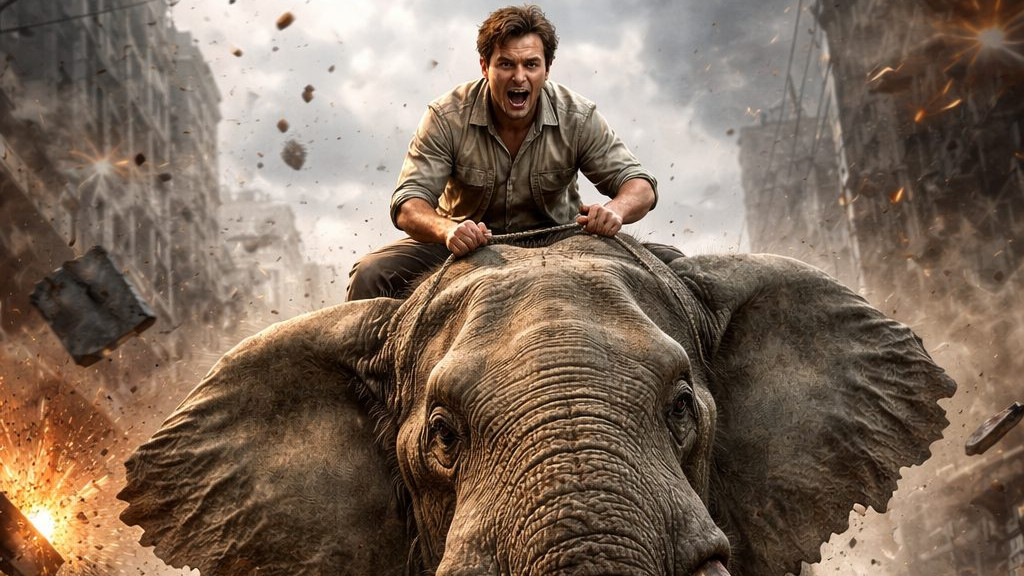
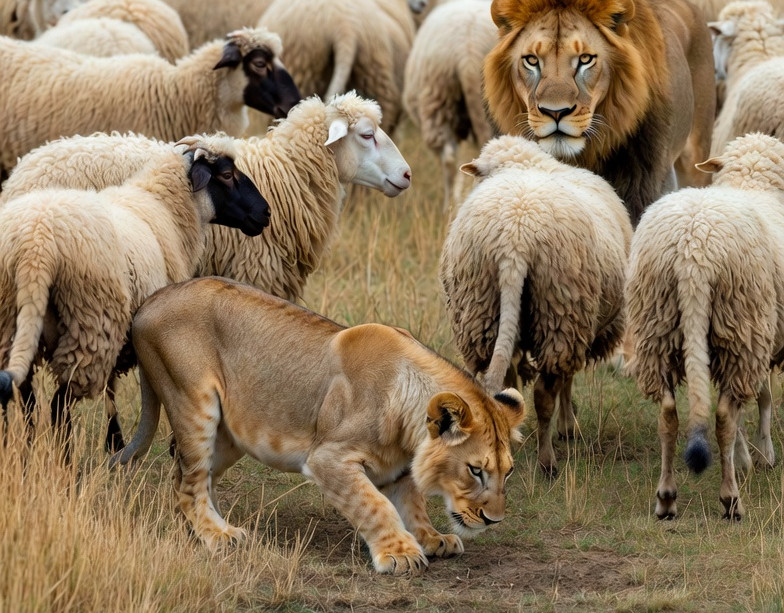
In Jonathan Haidt’s book, “The Happiness Hypothesis”, he starts the book off by discussing the difference between what we know we should do and what we instinctually want to do, and how they are often in conflict. He explains this through a metaphor involving a man riding an untrained elephant. The man represents logic and reason, aka the cognitive portion of our brain (the frontal lobe). The elephant represents our emotions and instincts, aka the lower portion of our brain (the temporal lobe).
With this metaphor, if the untrained elephant gets spooked or mad, he will create a path of destruction everywhere he goes and the rider has no say in the matter. The rider can know for certain everything will go wrong if the elephant gets upset, but no amount of yelling or slapping on the elephants back will halt him. He can only sit there and go along for the ride of destruction. This is exactly what happens if we do not train ourselves to react in the proper way when our instincts kick in. The cognitive brain simply takes a nap. This is specifically what martial arts training is attempting to correct.
I think this is a great metaphor to help explain why martial arts training is needed for everyone, not just kids. If we do not train for proper reactions in time of high emotional states such as the fight, flight or freeze response, we will have no control over the outcome. I’ve discussed multiple times on previous blogs how the fight, flight or freeze response reacts in the body through the sympathetic nervous system (SNS) and will not cover that here. I will provide a link at the end of this blog for those who need clarification and understanding of why this response is one of the most important aspects of self-defense and proper training.
If a person carries a weapon, such as a handgun, knife or pepper spray, they absolutely must train consistently to use it properly. Going to the shooting range or practicing some cuts on a target is nowhere near enough to train yourself to use that weapon when needed most. It must be trained while in a stressful environment as well as training how to disengage from an attack to draw said weapon. On top of that, it’s important to train in de-escalation techniques and spotting red flags from a distance to better prepare the mind and body for an altercation.
I first learned some knife defense techniques from my instructor years ago, possibly even before I earned my first black belt. He taught De-Tac (defensive tactics) to law enforcement in which knife defense was taught. One of the first things he taught us was how to practice. Meaning, learning the technique is just part of the training. With this he explained never to help your partner up and to never hand the weapon back to your training partner after disarming them. They must take it back from you through the proper defense.
How you train in class is how you will use those skills if they are ever needed. This is backed up with stories from police and security guard altercations over the years. One such example is that of an officer who successfully defended himself from a knife attack and disarm, only to immediately help the attacker back up and give him back the knife…which was quickly thrust into the officer’s abdomen. As dumb as this sounds, it is exactly what happens when the fight, flight or freeze response kicks in. All cognitive thought is halted and only instincts are at play.
That officer trained his knife defense well, but unfortunately, he consistently helped his partner back up and gave the knife back to perform the defense again and again. He trained himself to help his attack back up and give him back his knife. Here-in lies the problem and why it’s so important to train properly and regularly, even if you carry a weapon for self-defense.
Simply carrying a weapon does not help you. Simply “knowing” what to do in an altercation will do nothing. Being a so-called lover, not a fighter means nothing if you haven’t been trained to spot the red flags and that attacker has struck you seemingly out of nowhere. It is absolutely imperative to train self-protection on some level consistently. It goes beyond just the physical defense response to an attack though too. Learning the proper way to fall as well as the body conditioning we do can have a dramatic effect on the practitioner’s life.
Most martial arts systems teach falling techniques as most people naturally fall incorrectly, yet understandably. If you’ve never been taught to fall correctly and you suddenly fall, your first reaction will most likely result in extending your arms towards the ground to absorb the impact before the body hits. It makes sense as the most vital parts of us are contained within our head and torso. But this is not a good way to fall as the body can take much more punishment than the arms can. The arms will almost certainly break or dislocate. And by falling correctly, it can help protect the head as well. Especially in a self-defense scenario where you’re going to need your arms and consciousness to defend yourself.
Everyone is bound to fall at some points in their life, especially as we get older. A fall as a child is much more shocking than consequential in most scenarios. But as an adult, it can result in broken bones and concussions. Two things that can impair one’s life and possibly career. In the case of the elderly, it can be life threatening. Learning how to fall can limit and possibly remove those injuries. Beyond self-defense, that is something we can all find incredibly useful.
Aside from proper falling techniques is the conditioning that happens while practicing martial arts. Not just building muscle or increasing cardio through rigorous exercises, not all martial arts contain those. But the development of balance, coordination, spatial awareness, flexibility and mobility are all things that can dramatically improve our day-to-day life. I’ll give you an example.
I had a client a number of years ago that came to me primarily for fitness related issues, but we also worked on some martial arts to facilitate some cardio and coordination. She was in her late fifties and played in a band. She stated during our introductory session that she was no longer able to lift her equipment and had to occasionally hire help or buy more equipment (such as a dolly) to help move the equipment from the van to the stage and back again.
After a few months of training, she showed up to a session one day with a big smile on her face. She emphatically stated that she had moved all her equipment herself for a weekend gig and did so with ease. She no longer had to stress over how to get the equipment moved as she now had the strength and balance to move it herself. Her life just got noticeably easier from just a few months of training. She had stated that she wished she had started training sooner but had it in her head that she would get bulky or injured doing so. Neither happened. Only a great outcome.
Many people have it stuck in their head about what martial arts is all about, all while never stepping foot in a martial arts class room. Yes, the primary focus is self-defense (or winning a match in a combat sport martial art), but the secondary effects are what most will benefit from. We need to train that elephant we are riding around all day. That elephant is our emotions, our instincts and quick reactions – or lack there-of. We can know what to do in a time of need with crystal clarity. But without the training to back it up, all we can do is watch that elephant trample everything we care about when spooked or angered.
For more information on the sympathetic nervous system (SNS) aka fight, flight or freeze response, check out, Let Odin Take the Wheel.





Leave A Comment